Starting 23 February, New Zealand’s Peace and Disarmament Education Trust (PADET) will be accepting funding proposals for educational projects & post-graduate research relating to international peace, disarmament, and arms control. The deadline for grant applications is 6 April 2022.
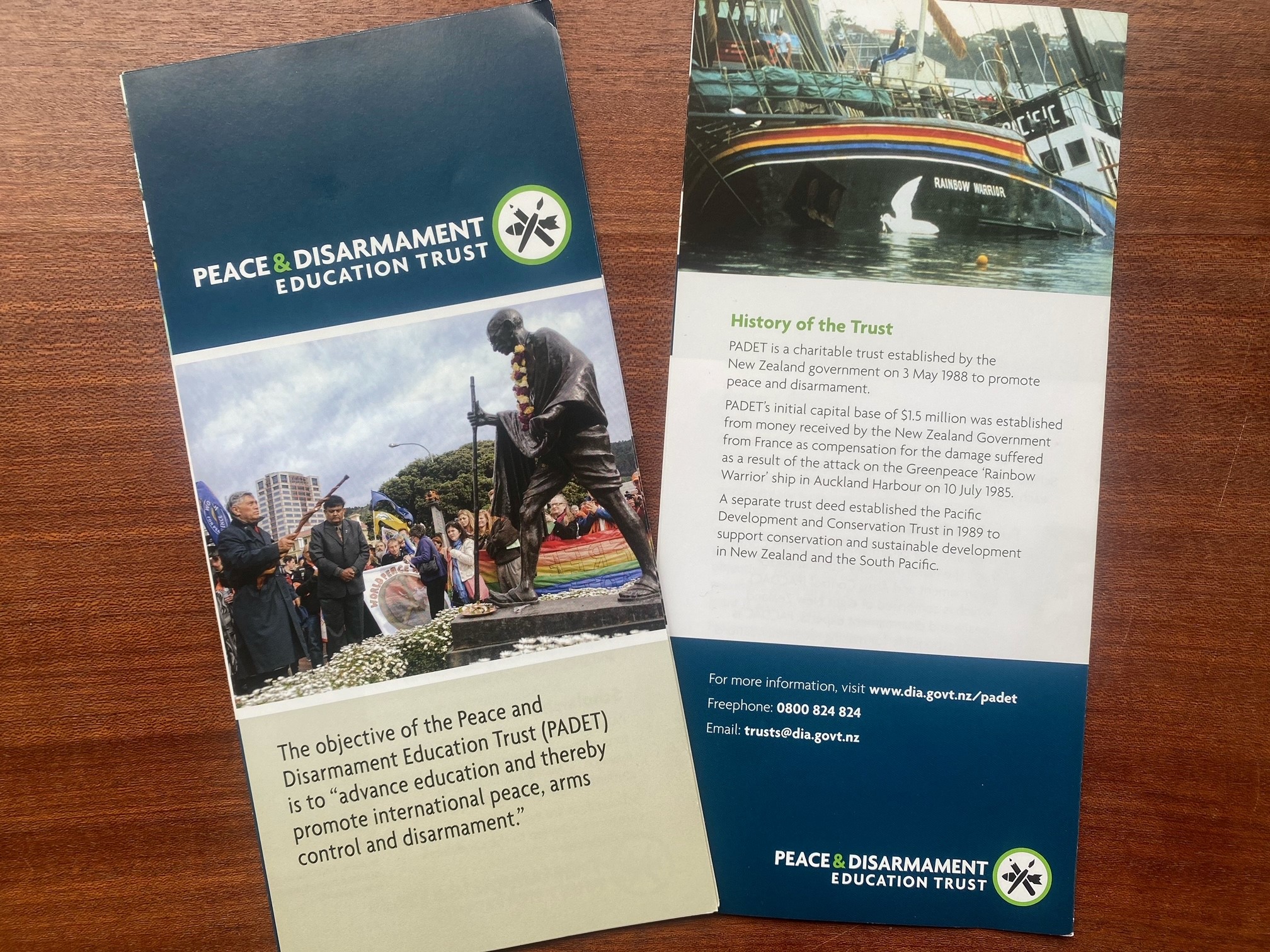
PADET was established in May 1988 with NZ $1.5 million that New Zealand received from the government of France after it bombed the Greenpeace Rainbow Warrior ship in Auckland Harbour on 10 July 1985. The objectives of PADET are to advance education and thereby promote international international peace, disarmament, and arms control.
According to PADET’s annual reports, between 1992 and 2020 it provided:
NZ $3.3 million in small grantsto approximately 125 non-governmental organizations and 115 individuals working to advance and support the promotion of peace, arms control and disarmament. The 597 project grants funded a wide array of activities and resources, including events, Model UNs, exhibitions, publications, internships, travel, speaker tours, internships, documentary films, artwork, and online materials.
NZ $775,000 to 68 post-graduate students(50 Masters of Arts and 18 PhDs). One-third of the scholarship recipients studied peace and conflict resolution, 28% focused on disarmament measures for nuclear and other weapons, and the rest looked at counter-terrorism, peacekeeping, New Zealand foreign policy, and the Pacific. Of the 68 recipients, 41 were women. Few Maori or Pacific Islanders have received PADET scholarships.
PADET is administered by the Department of Internal Affairs.
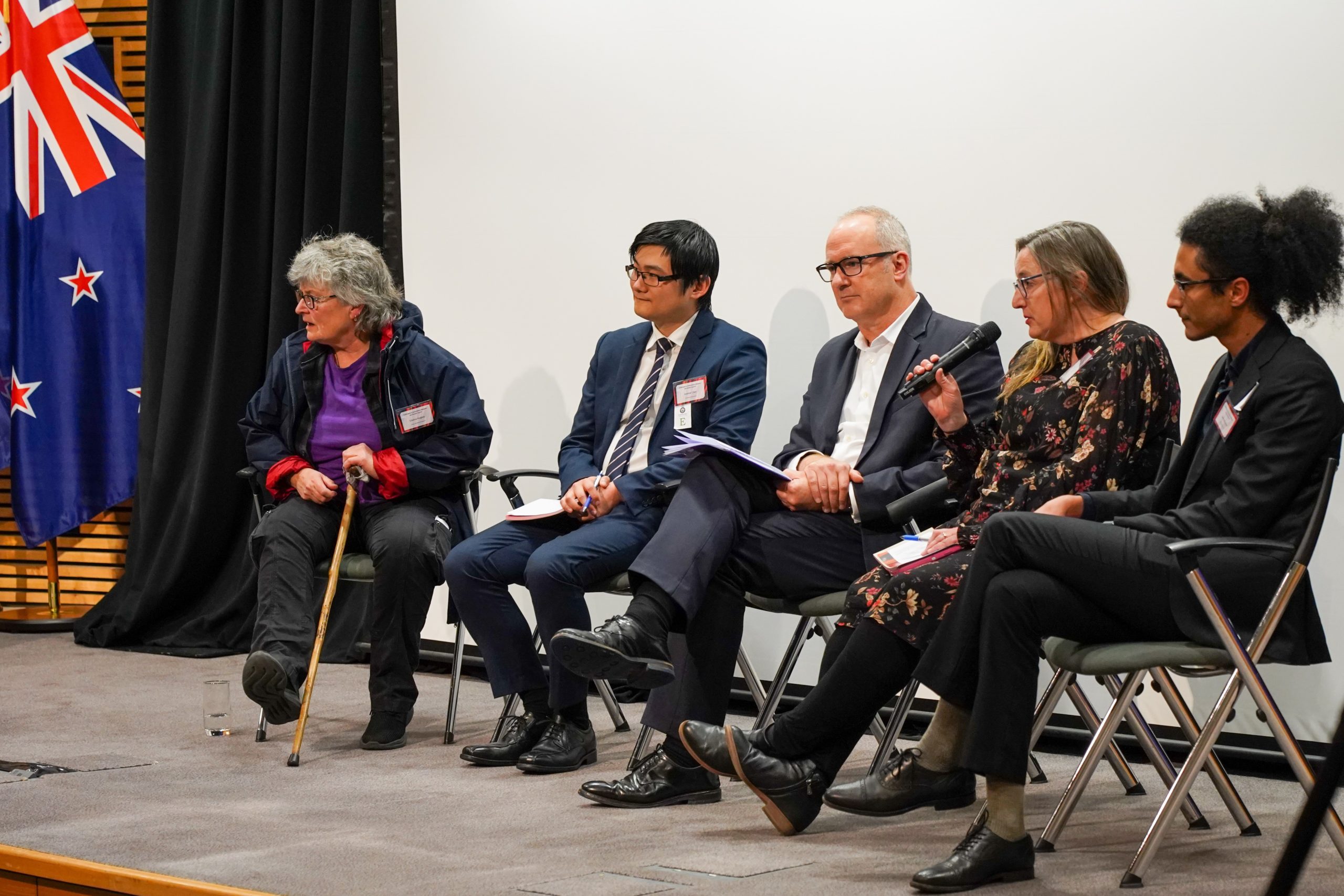
(From left to right) Edwina Hughes, Andrew Chen, Hon. Phil Twyford, Mary Wareham and Sakhr Munasser at the NZ Parliament Dialogue on Autonomous Weapons Systems, 10 August 2021
Eight New Zealanders have been appointed as members of the Public Advisory Committee for Disarmament and Arms Control (PACDAC) for the statutory body’s next 2022-2025 term. PACDAC chair Hon. Phil Twyford, Minister for Disarmament and Arms Control, announced the new roster of members on 22 December 2021. He said the line-up “reflects the significant talent we have in the New Zealand disarmament community” and “recognises that delivering on our disarmament goals means engagement across a wide range of society and disciplines.”
Established by statute through the 1987 New Zealand Nuclear Free Zone, Disarmament and Arms Control Act, PACDAC is mandated to provide independent, expert advice to government. It also distributes small grants to promote peace and disarmament educational projects and scholars, drawing from funds that France provided after it bombed the Greenpeace Rainbow Warrior ship in Auckland Harbour on 10 July 1985.
The Late Show with Stephen Colbert, 6 December 2021
The Aotearoa New Zealand government will push for new international law to prohibit and limit autonomous weapons systems, a move announced on 30 November by the Minister for Disarmament and Arms Control, Hon. Phil Twyford. The new policy is detailed in an 11-page Cabinet paper entitled “Autonomous Weapons Systems: New Zealand Policy Position and Approach For International Engagement.”
New Zealand’s Ministry of Foreign Affairs and Trade (MFAT) has launched an open call for nominations for people to serve on the Public Advisory Committee for Disarmament and Arms Control (PACDAC). This is a statutory body chaired by the Minister for Disarmament and Arms Control and comprised of eight experts who hold office for a term of three years.
MFAT acts as the secretariat to PACDAC and its invitation for nominations is welcome as the process of selecting PACDAC members has not always been open to nominations before. The MFAT call states that “in keeping with Cabinet guidelines, it is important the Committee has due balance in terms of gender, age, geographic and ethnic representation.” The explicit effort to improve the diversity of PACDAC’s expert membership is encouraging.
Dialogue on Autonomous Weapons and Human Control, New Zealand Parliament (c) MFAT, 10 August 2021
Aotearoa New Zealand’s Minister for Disarmament and Arms Control, Hon. Phil Twyford, hosted a Dialogue on Autonomous Weapons and Human Control at Parliament on 10 August 2021. According to the programme, “inaction on weapons systems that can select and engage targets without human intervention risks a future of warfare and policing outside of human control and responsibility.” The Dialogue considered New Zealand’s potential role in the international effort to ban and regulate autonomous weapons systems and retain meaningful human control over the use of force.
Taking action on killer robots is a key objective of the government’s 2021-2022 Disarmament Strategy, presented by the Minister in June 2021. As part of the strategy, the Ministry for Foreign Affairs and Trade has embarked on a consultation process to seek insights and diverse perspectives on concerns over autonomous weapons and input on the approach the government should take regarding regulation.
The Dialogue saw convergence on the urgent need for greater New Zealand action due to multiple concerns raised by autonomous weapons systems. Divergences that emerged during the discussion centered around ambition, resourcing, and timing of international regulation. There were some differences regarding the content needed for new legal rules such as definitions and scope. But overall the Dialogue and new survey show how public opposition to killer robots is firm and growing. There’s a visceral reaction against allowing machines to kill people. This serves as a firm basis for taking action to create new legal rules to prohibit and regulate autonomous weapons systems.
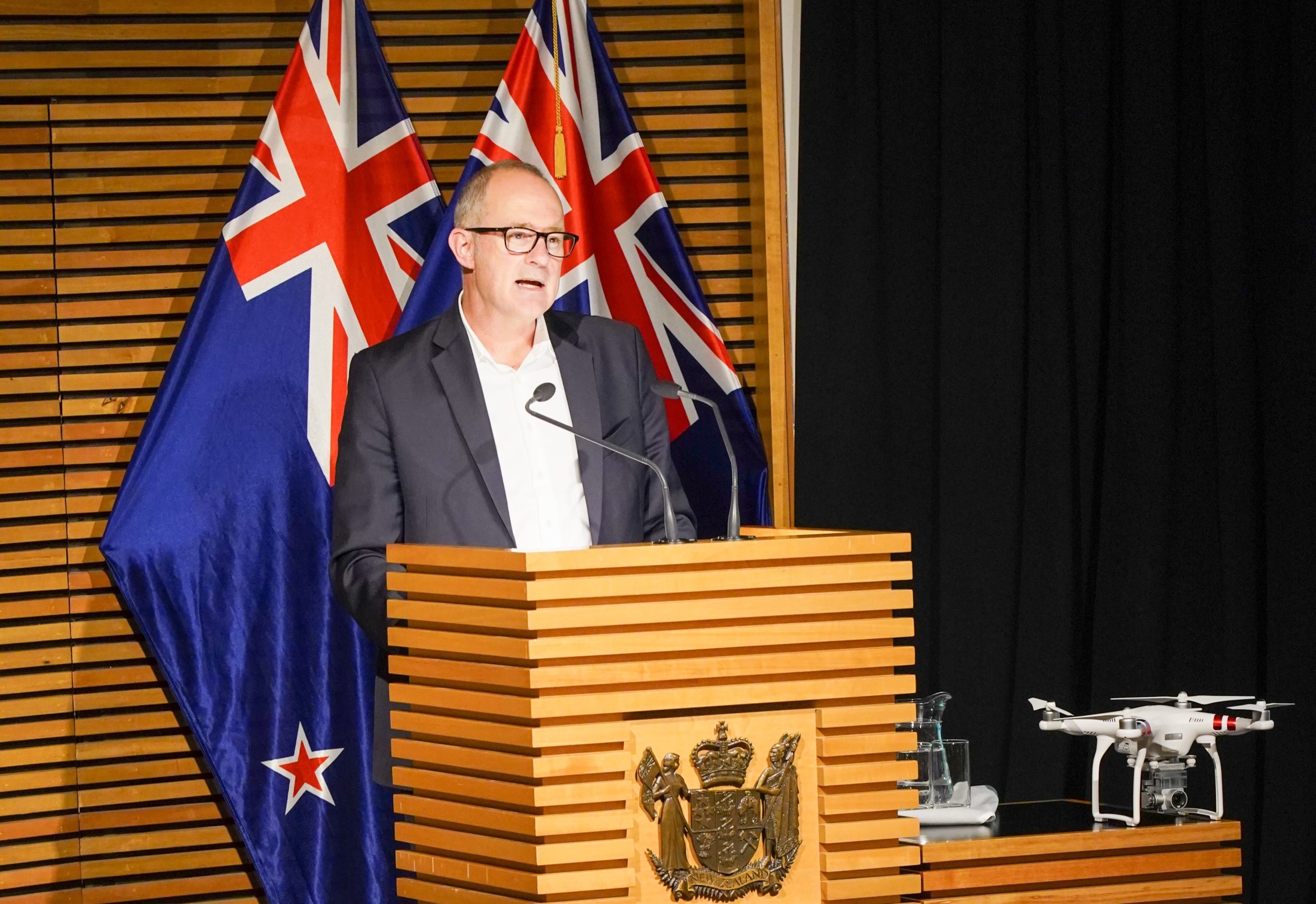
New Zealand’s Minister for Disarmament and Arms Control, Hon. Phil Twyford (c) MFAT, August 2021
It’s time to re-activate this Ministry for Disarmament blog. Created in Aotearoa New Zealand in 2011 to draw attention to the country’s Minister for Disarmament and Arms Control, a unique portfolio worldwide that was established in 1987. The blog and associated Twitter account have been kept by Mary Wareham of Human Rights Watch since then.
The Campaign to Stop Killer Robots and Soka Gakkai International are convening the Humanitarian Disarmament Forum in 2020 and 2021 on the topic of race and intersectionality. This marks the first time the Forum–held annually since 2021–has been held entirely online and, for the first time, focused on diversity—particularly race—and how to be more intersectional in working to advance humanitarian disarmament.
The Forum on the Arms Trade and the Center for Civilians in Conflict (CIVIC) convened the humanitarian disarmament forum in New York on 13-14 October. Approximately 80 people participated in the seventh annual forum. The cross-cutting discussion between various campaigns examined opportunities and challenges facing the collective effort to advance humanitarian disarmament and prevent human suffering. The forum explored the wide range of tools available to facilitate the work of the humanitarian disarmament community at large.